
Wednesday, April 8, 2020

Monday, March 30, 2020

https://c.mi.com/thread-1781090-1-0.html
playstore Best calculator in Google Play must watch the video ..
1) weight and Height =Kilograms to centimeters
2) Age
3) Discount%(off)
4) Percentage (%)
5) Date
6) Length Converter =Meter to kilometer
7) Area Convertert=Are to Square to kilometer
8) Volume Converter =liter to centilliter
9) Temperature Converter. To Clecius to Fahrenheit
10) Speed =kilometer par hours to kilometer par seconds
11)Time =minute to second
12)Mass =kilograms to milligram
Friday, March 27, 2020
How Covid-19 can live on your phone, and how you can clean it..
How Covid-19 can live on your phone, and how you can clean it..
Protect yourself from Covid-19

Putting your phone under water likely won't be enough
(Image: © Future)
There are three common strands of advice for minimizing the spread of Coronavirus, issued by bodies like the NHS and the WHO. If you have to sneeze, do it into a tissue or your sleeve. Avoid contact with unwell people, and wash your hands with soap, often.
Your phone complicates that last one. Sanitize your hands all you like, bacteria and viruses sitting on your phone may be transferred right back to those hands as soon as you check WhatsApp or Instagram.
Few of us clean our phones regularly. And we probably should have done before now.
A 2011 study by the London School of Hygiene & Tropical Medicine found one in six phones analysed showed traces of fecal matter. And you want your mobile to be free of nasties like Staphylococcus aureus and Acinetobacter spp. as well as Covid-19.
A professor who studies infectious disease told TechRadar, “Good hygiene and disinfecting regularly touched items like doorhandles, surfaces and telephones are essential as it is very easy to transfer the virus onto your clean hands by touching something that someone with the virus has come into contact with or been in the vicinity of."
Cleaning methods

- But what should we use to clean our phones?
You can apply the same substances you use to clean your hands, but some are more suitable than others. The current best advice is to moisten a lint-free cloth, the kind you might use to clean a pair of glasses, add some soap and give your phone and its case a thorough wipe down.
- Soap and water are a highly effective team
“Water itself doesn’t inactivate or ‘kill’ viruses but simply washes them away,” says the professor we spoke to. “Soap is far superior because it contains fat-like substances. Viruses themselves are composed of genetic material, proteins and fats. When soap interacts with viruses the fat-like substances in the soap compete with the viral lipids and cause the virus to break down.”
- This is better than using one of the popular anti-bacterial hand gels
“Alcohol gels are different because instead they contain a high concentration of alcohol, ethanol, that kills viruses,” says the professor. “A bonus of soap however is that when you wash with water you can cover a large surface area. So the preference is always to be using soap and water where possible. If not, then alcohol gel with a good technique is also fine.”
Be careful if you wash your phone down with an alcohol-based solution, though. Wipes and gels with a very high concentration of alcohol can damage the oleophobic layer used to avoid obvious oily fingerprint smudges on your phone’s touchscreen.
Does your phone have a screen protector? Some higher-end models have their own oleophobic coatings, but that cheap three-pack you bought from Amazon or eBay is likely little more than a thin sheet of plastic with an adhesive side.
All smartphone makers also recommend avoiding cleaning solutions that contain bleach or abrasives, and the use of any rough cloths. These may spoil the finish of a phone’s metal sides and cause micro-abrasions in glass that will dull its surface. We’re out to clean the phone, not ruin it.
- UV virus-zapping
You can also go “high tech” if you want. Companies like PhoneSoap and Homedics make UV sanitizers for your phone. These are like little tanning beds that bathe them in ultraviolet light.
Even Samsung stores are now offering to sanitize your phone through a similar method for free in some locations.
“Sunlight also inactivates coronavirus, which is where the concept of UV-based cleaning kits has come from,” says the professor. “Just bear in mind that this approach will only slowly inactivate the virus over time whereas soap and disinfectants do this almost immediately.”
“There are also lots of other products on the market that claim to kill coronavirus but it is cheaper and easier to stick to good hygiene, hand-washing with soap and the use of disinfectant”
This is good news for your pocket. UV phone cleaners are much more expensive than a bar of soap or a bottle of handwash.

Water versus phones
We also advise, as ever, being careful with water around your phone.
The Samsung Galaxy S20, iPhone 11, Huawei Mate 30 Pro, and many others, have been tested for water resistance. These particular models have an IP68 rating, which means they are designed to withstand immersion in freshwater at a depth of 1.5m for 30 minutes.
However, most of us have at some point dropped our phones. And that may have compromised the little rubber gaskets that keep water out of a phone’s insides. Keep water away from your phone’s sockets. Liquid can also seep through cracks in the display glass of damaged screens and cause problems worse than those your phone already has.
- Is your phone waterproof? Here's how to find out
Half-life
How long can a virus survive on your phone? Long enough for it not to be an excuse for mindful hygiene, particularly in the case of Covid-19.
“Some viruses can only survive for a very short period of time outside of the body because they are so dependent on nourishment or particular physiological conditions (e.g. HIV) whereas others can last longer,” says the professor.
"Research on the coronavirus suggests it can remain viable for up to four hours on copper, up to 24 hours on cardboard and up to 2-3 days on plastic and stainless steel. This is all impacted by the environment.”
If the coronavirus can survive for days on at least parts of your phone, now is a good time to start cleaning it regularly, as well as your hands. Concerned about where to get the most up-to-date health advice? Head to the relevant website of your country’s healthcare system. That’s NHS.ukin the UK, CDC.org in the US and health.gov.au in Australia.
So, what's the easiest way to clean your phone?

- Prepare a bowl of hot (but not boiling) soapy water. Don't use anything other than household soap as it may damage the coating on your phone.
- Bring your phone to the water, and be sure to take it out of its case. Then turn your phone off before you begin to clean it.
- Do not submerge your phone, unless it's IP68 water-resistant. Even then, we'd recommend not submerging your phone entirely.
- Take a cloth and moisten it using the soapy water.
- Gently rub the cloth around your phone ensuring you get to every area you can find. If you have a case, do the same for that.
- Ensure you don't allow the water to get into any of the openings of the phone such as the charging port or speaker grille.
- Then wipe your phone down again with a clean microfibre cloth.
- Leave your phone to dry out fully before turning it back on again. Repeat this method as much as you need to.
Xiaomi Mi 10 global launch set for March 27
Xiaomi Mi 10 global launch set for March 27
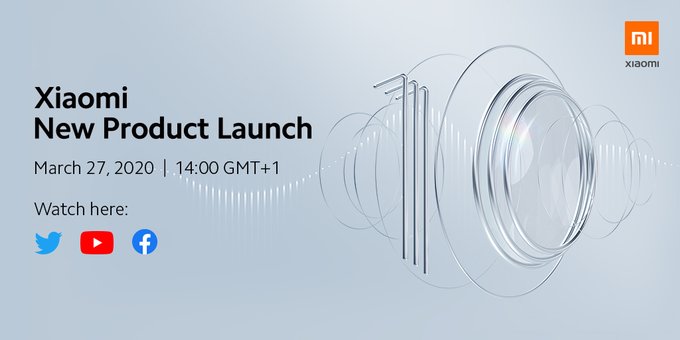
Xiaomi’s flagship phones for the year, the Mi 10 and the Mi 10 Pro, were unveiled last month in China, and the company has now confirmed we'll learn global details for both phones on March 27.
Xiaomi has often brought many high-end flagship components to lower price points with its Mi series. If the Chinese pricing is any indication, the Mi 10 family should also do the same.
After the cancellation of MWC 2020 where the launch was originally supposed to take place, the phones will make their global debut at the end of this month but we already know a lot of the spec to expect.
- What you need to know about Xiaomi Mi 10
- The very best Xiaomi phones
- Will there be a Xiaomi Mi Band 5?
The phones will be detailed in a livestream on March 27 at 1PM GMT / 6:30PM IST / 9AM EST / 6AM PST or midnight on March 28 in Australia (AEDT).
 Enough waiting!
See you on March 27th!
Make sure you tune in to get all the details.#Mi10 #LightsCameraAction
919 people are talking about this
Xiaomi Mi 10 specifications
The only differences between the two phones comes with the cameras and the battery capacity. The rest is similar across the board. This means that the Mi 10 and the Mi 10 Pro will sport a curved 6.67-inch Super AMOLED display with a 90Hz refresh rate. The resolution is 2,340 x 1,080, and HDR10 support is also included.
On the inside, we’re looking at the latest Snapdragon 865 chipset along with the Adreno 650 GPU. There’s up to 12GB of LPDDR5 RAM and 512GB of UFS 3.0 storage. The Snapdragon X55 modem will bring 5G capabilities. The phones will run on MiUI 11 based on Android 10 out-of-the-box.
As for the cameras, the Mi 10 Pro has a 108MP f/1.69 primary camera, followed by a 20MP ultrawide shooter, a 12MP “portrait” lens with a 2x zoom, and another 8MP telephoto lens with a longer 10x hybrid zoom. The regular Mi 10 retains the primary camera but switches out the pair of telephoto lenses for a 2MP macro camera and a 2MP depth sensor. A 20MP camera handles selfies on both.
The Xiaomi Mi 10 Pro has a 4,500mAh battery with support for 50W fast charging, while the Mi 10 has a slightly bigger 4,780mAh battery which can be charged at 30W. Both phones also feature 30W fast wireless charging, as well as reverse wireless charging.
How much will it cost?
In China, the Mi 10 is priced at CNY 3999 (about Rs 40,000 / $570 / £440 / AU$850) for the base variant with 8GB RAM and 128GB storage. It is available in three colors — black, gold and blue.
The Mi 10 Pro starts at CNY 4999 (about Rs 51,000 / $715 / £550 / AU$1050) for the base variant with 8GB RAM and 256GB storage. Both phones also come with higher storage variants and more RAM, if you want it.
Xiaomi has already confirmed that the Mi 10 flagship can be expected to come to other countries such as India this year, but we don't know exactly where each new phone will be available yet.
Huawei P40 release date, price, news and everything you need to know
Huawei P40 release date, price, news and everything you need to know..
For more details please click the link .

Huawei has had a tumultuous six months since the unveiling of the Huawei P30series, but it is now showing off its next top-end flagship phone in the form of the Huawei P40.
The Huawei P40 family features three different devices; the Huawei P40, Huawei P40 Pro and, a new addition to the line-up for 2020, the Huawei P40 Pro Plus.
These three handsets feature top-end specs to try and combat the Samsung Galaxy S20, Google Pixel 4, and devices like the upcoming iPhone 12 and OnePlus 8. But keep in mind that Huawei’s app selection is lacking compared to those alternatives.
Below we’ve collected together all of the information that we’ve learnt so far about the handsets.
PLAY SOUND
- Check out our Huawei P40 Pro hands-on review
Huawei P40 release date and price

The Huawei P40 is set to hit stores in some regions on April 7 and in Australia on April 16, at a cost of £699 / AU$1,099 (around $870), with the Huawei P40 Pro arriving on the same day for £899 / AU$1,599 (roughly $1,100).
The Huawei P40 Pro Plus meanwhile isn't scheduled to land until June and will cost €1,399 (approximately $1,500 / £1,300 / AU$2,500).
Of course, aside from the confirmed European and Australian pricing above, the other prices listed won't be exact conversions and availability in key regions is still unclear.
Huawei handsets have never been widely available in the US, and they’re also a little more uncertain in the UK now they don’t come with Google Mobile Services.
For example, the Huawei Mate 30 Prolaunched in September last year but it didn’t come to a UK retailer until early 2020. Even then, it came with little fanfare and a complicated process to set it up.
That means we don’t know how long you’ll be waiting to be able to buy these new handsets.
That said, Huawei is a big brand in Australia and both the Huawei P40 and P40 Pro have been confirmed for release Down Under.
Huawei P40 design and display

The Huawei P40 range of phones don't look radically different from their predecessors, and the main difference is that the camera array is a little bit bigger, with all the lenses on the back housed in one big bump.
Well, the Huawei P40 Pro has another fairly noticeable change, as while it retains the curved edges, it also has a curved top and bottom. This might make it pretty slippery.
The Huawei P40 range comes with a glass rear, except the P40 Pro Plus which has a ceramic rear that is said to be more scratch-resistant, and apparently feels more premium in the hand.

The Huawei P40 is IP53 water and dust resistant, but the P40 Pro and Pro Plus are IP68-rated, which should make them survive a watery dip should accidents occur.
There's no notch on any of these phones, with the front-facing cameras instead housed in a pill-shaped cut-out in the top left of the display.
The screen on the Huawei P40 is 6.1 inches with a 2340 x 1080 resolution, while the P40 Pro and Pro Plus are both 6.58 inches with 2640 x 1200 resolutions. All the phones displays have 90Hz refresh rates, a step up over the P30s but less than the 120Hz that a few top-end phones have now.
One improvement here is said to be the in-screen fingerprint sensor, which is apparently 30% bigger so it's easier to use, and it's apparently 30% faster too.
Huawei P40 camera
All three of these devices are set to offer a top-end camera experience, but the higher end Huawei P40 Pro Plus is set to be the best experience.
Starting with the Huawei P40, this phone comes with a 16MP ultra-wide-angle f/2.2 shooter, a 50MP RYYB f/1.9 camera and an 8MP telephoto.
That telephoto is capable of shooting up to 3x optical zoom, and it’s likely to be able to do more with a digital zoom. This is the same as the Huawei P30.

The Huawei P40 Pro has a much more powerful camera setup on paper. It features the 50MP main camera from before but a 40MP ultra-wide snapper and a 12MP 'super-zoom' telephoto camera. There's also a Time-of-Flight (ToF) sensor.
This 'super-zoom' camera facilitates 10x optical zoom, which is pretty impressive and enough to rival the Samsung Galaxy S20 Ultra.
The Huawei P40 Pro Plus has even that beat though, as it has the same 50MP main lens along with the 40MP ultra-wide one, but then has an 8MP f/4.4 periscope lens offering 10x optical zoom, and an 8MP f/2.4 telephoto one with 3x optical zoom, plus a ToF sensor. Those dual zoom lenses also allow for 20x hybrid zoom and 100x maximum zoom.
Each of the phones has a 32MP front-facing camera, and the Huawei P40 Pro and Pro Plus both have ToF sensors on the front too.
While pictures taken on the phones should be great, Huawei made a point of the new and improved video-shooting modes like 4K time-lapse, 7680fps ultra-slow-mo, audio zoom (so when you zoom video in the audio only focuses on what's in frame), and a max of 4K 60fps video shooting (notably not 8K, as many new phones have).
Huawei P40 specs and battery
There’s a Kirin 990 5G chipset in each of the three Huawei P40 phones, which is the accomplished chipset we saw in the Mate 30 from late 2019. It should return pretty great benchmarking scores when we test it out, and Huawei also said it's good for optimizing the phone to drain less power. That chipset also means the whole range is 5G-compatible.
For RAM, you're looking at 8GB in all models, with 128GB of storage in the Huawei P40, 256GB in the P40 Pro, and 512GB in the P40 Pro Plus.
As for batteries, there's a 3,800mAh one in the Huawei P40 and a 4,200mAh in the P40 Pro and Pro Plus, so they're not huge, but combined with the optimizations the phones could still last a long time without charging.
The Huawei P40 has 22.5W charging, but that's the only way you can charge it up - there's no wireless charging. On the P40 Pro and Pro Plus, though, you can use 40W charging, both wired and wireless.

Huawei P40 software
The three phones come running EMUI 10.1 software from Huawei, and that doesn’t include popular Android apps like the Google Play Store, YouTube or Google Chrome.
That’s going to cause a lot of problems for users in the west who are embedded in those services already, as it means you won't be able to download most popular apps as easily, and instead Huawei offers its own alternatives through the Huawei App Gallery.
There’s a variety of apps available on that store, but it doesn’t compare to the amount available on iOS or other Android devices. Huawei endeavours to include more and more apps in the future, but at present the selection is quite lacking.
There is a way to install certain apps onto the handsets without any dubious hacking though, which you'll find in our guide to Huawei Mobile Services apps here.
Beyond the app situation, the software should be familiar if you've used Huawei phones before, but there are some new features, such as a new voice assistant called Celia.
There's also a multi-window feature for multitasking, and a video calling app called MeeTime.
Subscribe to:
Posts (Atom)